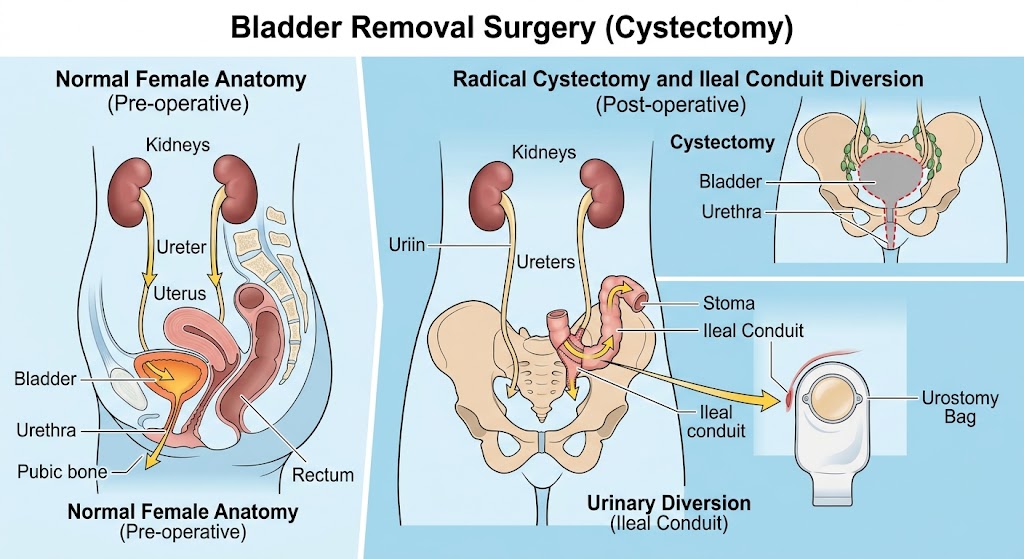
Cystectomy is a surgical procedure to remove the urinary bladder. It is commonly performed to treat bladder cancer and certain other serious conditions affecting the bladder and surrounding pelvic organs.
A cystectomy involves the removal of part or all of the urinary bladder. In men, a radical cystectomy usually includes removal of the bladder, prostate, and seminal vesicles. In women, it may also involve removal of the bladder, uterus, ovaries, and a portion of the vagina, depending on the underlying condition.
After the bladder is removed, a urinary diversion is created to allow urine to leave the body. Your surgeon will discuss the available urinary reconstruction options and recommend the approach that best suits your medical needs and lifestyle.
Cystectomy is most commonly performed for invasive or recurrent bladder cancer. It may also be recommended for certain advanced pelvic cancers, including colorectal, prostate, or endometrial cancer, as well as selected noncancerous conditions such as interstitial cystitis or congenital bladder abnormalities.
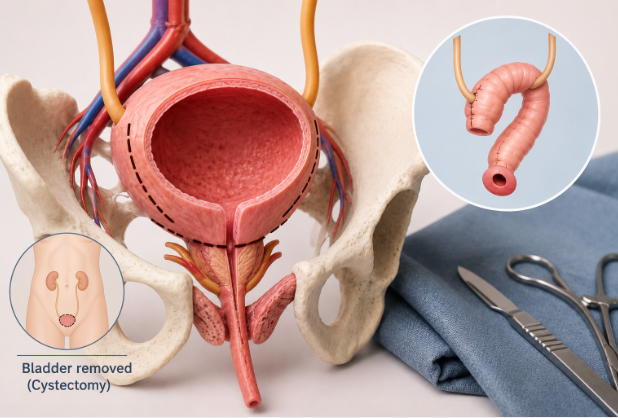
A cystectomy is recommended when removing part or all of the bladder provides the most effective treatment for cancer or other serious bladder conditions. The type of surgery depends on your medical condition, overall health, and individual treatment goals.
Cystectomy is most commonly performed to treat invasive or recurrent bladder cancer when bladder removal offers the best chance of successful treatment.
Cancer that begins in nearby organs and spreads to involve the bladder may require cystectomy as part of comprehensive cancer treatment.
Certain birth defects affecting the urinary system may require bladder removal and reconstruction to restore urinary function.
Severe neurological conditions affecting bladder function may require cystectomy when other treatment options are unsuccessful.
Chronic inflammatory conditions of the bladder that do not respond to medical treatment may be managed with cystectomy.
After bladder removal, your surgeon creates a urinary diversion tailored to your health, lifestyle, and treatment needs.
The type of cystectomy and reconstruction is selected after considering your diagnosis, overall health, and personal preferences.
Cystectomy is a complex surgical procedure that involves removing the bladder and, in most cases, creating a new way for urine to leave the body. While it is generally safe when performed by experienced surgeons, it carries certain risks and potential complications.
Bleeding may occur during or after surgery and, in some cases, a blood transfusion or additional treatment may be required.
Blood clots can develop in the legs or lungs after surgery. Early mobilization and preventive medications help reduce this risk.
Although uncommon, patients with underlying heart conditions may have a small risk of heart-related complications during or after surgery.
Surgical site infections, urinary tract infections, or other postoperative infections may occur but are usually managed with antibiotics.
Lung infections such as pneumonia may develop after surgery, especially if recovery is prolonged or mobility is limited.
Changes in urinary diversion after bladder removal can increase the risk of dehydration if fluid intake is inadequate.
Changes in body fluid balance may lead to electrolyte abnormalities that require monitoring and treatment.
A blockage in the intestines or the ureters may occur after surgery and could require additional procedures or surgery.
Rarely, severe complications may require another operation or hospital readmission. In extremely uncommon cases, life-threatening complications or death can occur.
Preparing properly for a cystectomy can help reduce complications and support a smoother recovery. Your healthcare team will provide personalized instructions before your surgery.
Essential steps before your procedure
Follow your healthcare team's instructions
During a cystectomy, the bladder is removed along with nearby tissues when necessary. Your surgeon will also create a new urinary diversion so urine can leave your body safely after surgery.
During surgery, the bladder, part of the urethra, and nearby lymph nodes are removed. A urinary diversion is then created to allow urine to leave the body.
In men, the prostate and seminal vesicles are usually removed. In women, the uterus, ovaries, and part of the vagina may also be removed when required.
After the bladder is removed, your surgeon creates a new pathway for urine using a section of the intestine, depending on your medical condition.
This traditional approach uses a single incision in the abdomen to access the bladder and surrounding pelvic organs.
Several small abdominal incisions are made to insert specialized surgical instruments, resulting in less tissue damage and often faster recovery.
In robotic surgery, the surgeon controls robotic instruments from a console, providing enhanced precision through a minimally invasive approach.
Find answers to common questions about bladder removal surgery (cystectomy), the procedure, recovery, and urinary diversion.